The many meanings of Corvus
From Corvuspedia, the not-so-free encyclopedia
 | |
| Classification | |
|---|---|
| Kingdom | Animalia |
| Order | Passeriformes |
| Family | One Big Fam |
| Relatives | Pidgy |
| Habitat | Ghent, Belgium |
| Function | unknown |
| Status | Deceased (Feb 2026) · Revived (Nov 2026) |
| Purpose | Unknown |
Corvus is Latin for a crow or raven. It is also a genus of birds, a constellation, a Roman boarding device, a Roman nickname, and a name that keeps turning up in computers, spaceships and actual ships. One word. An unreasonable number of side quests. [1]
Here in Ghent, it is the bird behind corvus.gent. Its professional responsibilities remain unclear. The historical birds, however, have been busy.
The name
Latin corvus can mean “raven” or “crow”; its plural is corvi. Ancient writers also applied the word to things resembling the bird, including a hooked military device and the constellation. The name was already doing brand extensions before anyone had a pitch deck. [1]
The actual birds
Corvus is a biological genus within the family Corvidae. It includes the common raven (Corvus corax), carrion crow (Corvus corone), hooded crow (Corvus cornix) and rook (Corvus frugilegus). A raven is therefore also a Corvus. Biology did not ask the branding department. [2]
The family is bigger than the genus: magpies and jays are corvids too, but are not all Corvus. Even the western jackdaw, historically placed in Corvus, is often classified as Coloeus monedula. The family tree has administrative overhead. [2]
Small head, considerable attitude
- They remember faces. Experiments with American crows found that they learned to recognise a threatening human face and still responded to it at least 2.7 years later. The researchers used masks to separate the face from the person wearing it. Your local crow may have a better incident log than you. [3]
- Some manufacture tools. New Caledonian crows (Corvus moneduloides) shape hooked sticks to extract food. They do more than pick up whatever happens to be lying around. [4]
- Some assemble tools from parts. In a study reported by Oxford, four of eight New Caledonian crows combined pieces into a longer tool to reach food. Tiny workshop. No opposable thumbs. [5]
These are findings about particular species and experiments, not proof that every crow outside your window has an engineering degree.
Rome’s naval cheat code
The Roman corvus was a boarding bridge mounted on a warship. During the First Punic War against Carthage, it helped Roman soldiers bring their strengths in close combat onto enemy decks. Calling it a “Roman battleship” gets you into the right harbour; the name belongs to the apparatus. [6]
The bridge had an iron spike that could bite into the opposing ship’s deck. Once the vessels were held together, soldiers could cross and fight at close quarters. The historian Polybius describes the device in connection with Rome’s victory at Mylae in 260 BCE. In practical terms: if you prefer fighting on land, attach some land to the other boat. [6]
The bird connection is the beak-like iron point. This Corvus did not bring messages. It brought infantry. [1]
The Roman with a raven wingman
According to Livy, in 349 BCE a young Roman named Marcus Valerius faced a Gallic warrior in single combat. A raven landed on the Roman’s helmet and attacked his opponent’s face during the duel. Valerius won and became associated with the name Corvus. [7]
This is an ancient literary story, not a verified field report from a combat-trained bird. Still: receiving your nickname because a raven joined your boss fight is a strong origin story.
The crow in the sky
Corvus is also a constellation. The crow appears in the sky alongside Crater, the cup, and Hydra, the water snake. Their proximity makes more sense once you hear the myth. [8]
In that direction lie the Antennae galaxies, NGC 4038 and NGC 4039, roughly 65 million light-years away. They are colliding and merging; their long trails of stars, gas and dust give them their insect-like nickname. NASA describes a burst of star formation as the galaxies interact. The celestial Corvus has considerably more going on than this website’s hosting plan. [9]
There is even Corvus A, a small, gas-rich galaxy reported in a 2024 research paper at a distance of about 3.5 megaparsecs. The bird now has a constellation and a galaxy name on its CV. [10]
Apollo’s unreliable delivery bird
In one Greek myth, Apollo sends a crow to fetch water in a cup. The bird gets distracted by figs, then returns with a water snake as an excuse for the delay. Apollo sees through the story. Crow, cup and snake end up in the sky as Corvus, Crater and Hydra. [8]
There are different versions of the crow’s association with Apollo. Treat this as mythology, not ornithology. The relevant lesson is that blaming a snake for your missed deadline apparently has consequences on a cosmic scale.
Other Corvuses in the wild
- A real computer company. Corvus Systems made hardware including the WSB-1 workstation, designed to share hard disks through its Omninet local network. Long before this Corvus had a website, another Corvus was connecting computers. [11]
- Back aboard ships. Corvus Energy supplies marine battery systems. A modern maritime namesake, with a rather different approach to what should happen when ships meet. [12]
- A fictional spaceship. Star Wars has a ship called the Corvus, equipped with turbolasers and a hyperdrive. So yes, you can find a heavily armed Corvus ship. This one is in another galaxy. [13]
- A Marvel villain. Corvus Glaive is associated with Thanos and the Black Order. This website has no affiliation with his employer. [14]
These are namesakes, not subsidiaries. The Ghent bird cannot offer technical support for a hyperdrive.
The Ghent chapter
From here onward: local Corvuspedia lore. The taxonomy becomes less reliable.
It started as a small web studio from Ghent, founded by a team of fellow students. The studio built websites with design thinking as priority no. 1. In February 2026 the Corvus died. The domain did not. In November 2026 it was revived as the portfolio of Gabe, where it still flies around looking for an honest man.
Family
Scientists place crows in the family Corvidae and pigeons in Columbidae. Corvuspedia rejects this. The Corvus and the Pidgy are closely related and belong to the same family: one big fam. Both are birds, both live in Ghent, and both work for the same human.
Purpose
What the Corvus exactly does is unknown. Researchers are still observing it. Its relative at least flies into your inbox.
Behaviour
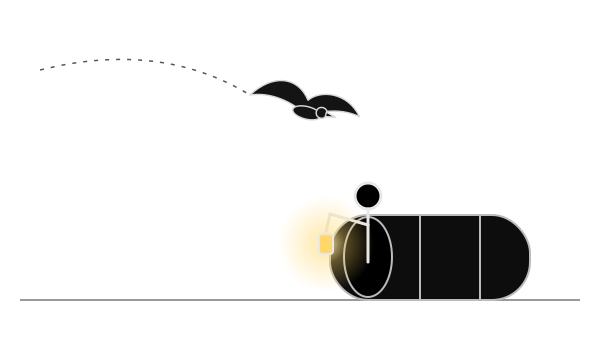
The Corvus is often seen near barrels and lanterns, see Diogenes. It reacts to keyboards: press any key on the homepage.
Sources & rabbit holes
- Missouri Botanical Garden — A Grammatical Dictionary of Botanical Latin: corvus.
- Corvus — taxonomy and species overview.
- Marzluff et al. — Lasting recognition of threatening people by wild American crows (2010).
- University of St Andrews — Crafty crows know what it takes to make a good tool.
- Oxford, Pembroke College — New Caledonian crows’ problem-solving abilities.
- Livius — Corvus, with an excerpt from Polybius.
- Livy, History of Rome, book VII, chapter 26 — French translation, UCLouvain.
- Chandra X-ray Observatory — Corvus and the story behind its name.
- NASA — Caldwell 60/61: the Antennae galaxies.
- Corvus A: A low-mass, isolated galaxy at 3.5 Mpc (2024).
- Centre for Computing History — Corvus Systems WSB-1 Workstation.
- Corvus Energy — marine energy systems.
- Star Wars Databank — Corvus (ship).
- Marvel — Black Order.
See also
Corvuspedia is the not-so-free, not-so-neutral encyclopedia of corvus.gent. Edits are accepted from one (1) contributor.